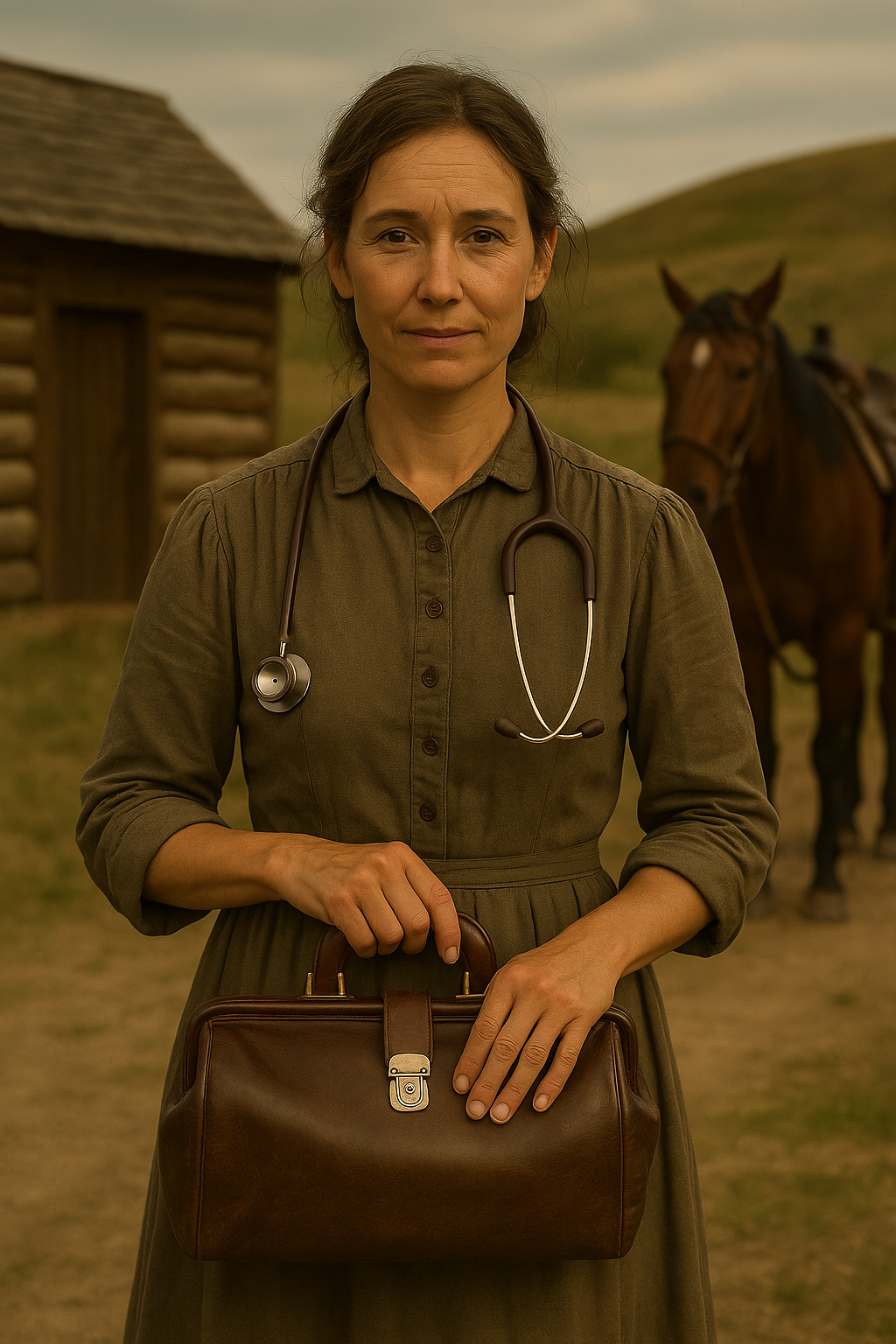
Folks call me Doc Ruth. If your world turns sideways — pain, fever, fall, frostbite, a bad cut — I’m the one they send for. I don’t promise miracles. I’ll come, stay steady and do the most good I can with what I have.
Frontier medicine is part science, part grit. I set bones, stop bleeding, break fevers with quinine, and fight infection with boiled water and clean dressings — because out here, “small” wounds can turn deadly fast.
And when I can’t fix a thing outright, I can still ease pain, calm fear, and keep a family together. A doctor’s work isn’t only tools and tinctures — it’s trust.
How a Frontier Doc Thinks
Panic spreads faster than illness. I slow the room down — one voice, one plan — then I work.
I handle what kills quickest: heavy bleeding, trouble breathing, then bones and wounds.
Boiled tools, clean cloth, fresh water. Infection is the enemy I watch hardest.
Fence rails become splints. Shirts become bandages. But I never gamble with filth or haste.
I re-check, re-set, re-wrap. Healing is a road — and sometimes it doubles back.
I teach what to watch for — fever, swelling, stink of infection — so families know when to send for me again.
What I Do
- House calls across open country — day or night
- Deliver babies; care for mothers & newborns
- Set bones, stitch wounds, treat illness & infection
- Keep contagion from spreading when possible
What I Treat
- Fevers, chills, lung sickness, dehydration
- Injuries: falls, kicks, crushed fingers, axe cuts
- Frostbite, burns, infected wounds
- Snakebite scares (and the trouble after)
What I Carry
- Satchel: needles, sutures, scalpels, forceps
- Bandages, clean cloth, carbolic, soap
- Quinine, laudanum, whiskey (and caution)
- Thermometer, lantern, spare wraps & blankets
How I Stay Safe
- Medical Safety Rule: I never treat a wound dirty — tools boiled, hands cleaned, dressings fresh
- Isolation when sickness spreads (as best as a frontier allows)
- Careful riding: weather, river crossings, and night trails
- Steady voice — fear makes injuries worse
Hard Realities
- Supplies run out — and replacement takes weeks
- Payment is often barter, not cash
- Infection can undo “good work” overnight
- Some losses are unavoidable — I still show up
Who I Serve
- Homesteaders, freighters, ranch hands, townsfolk
- Travelers caught far from help
- Neighbors first — patients always
- Anyone in need, if I can reach them
Medicine Where It Happens
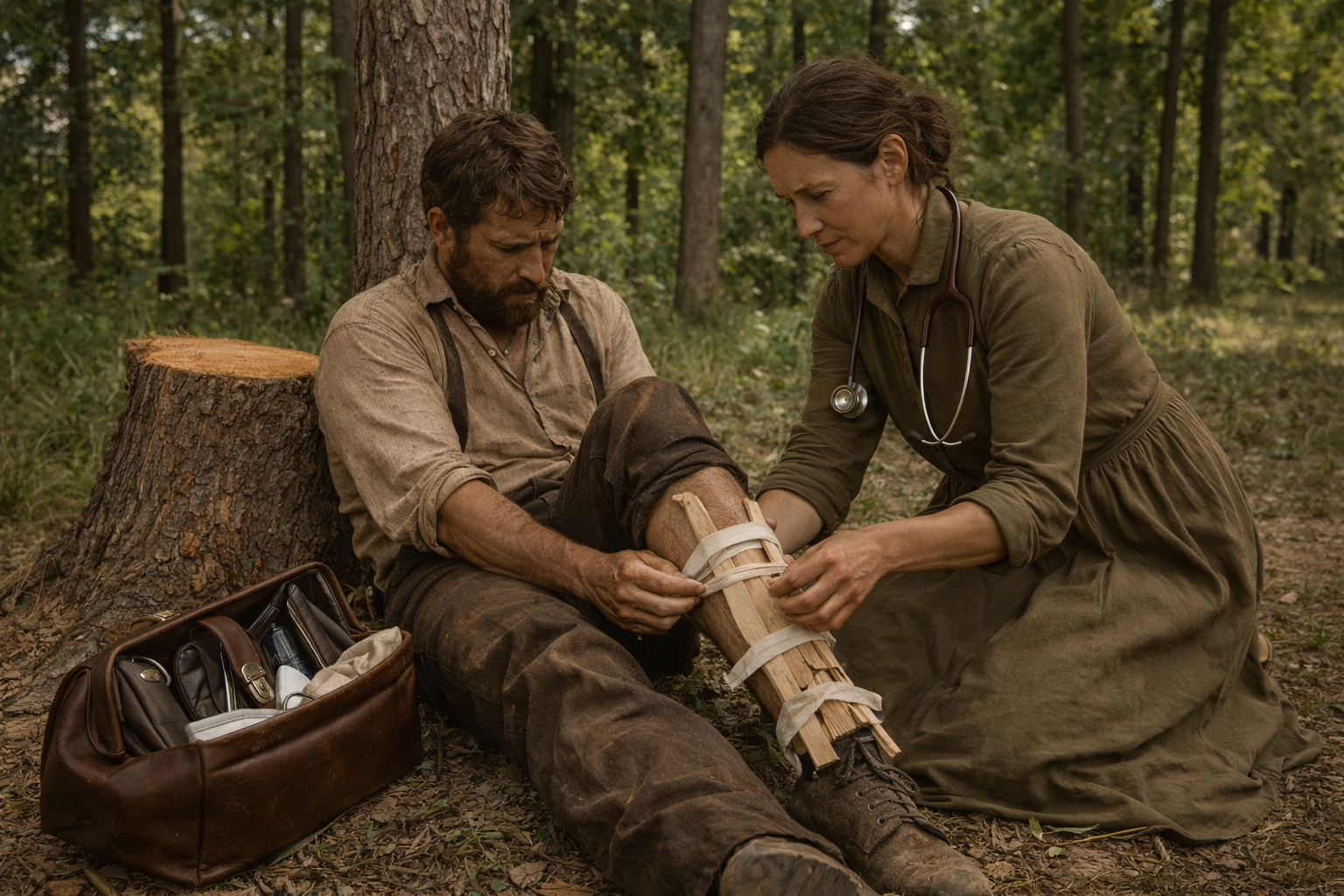
In the Territory, trouble doesn’t wait for a clean bed and a quiet room. A man can go down under a falling tree, or slip on ice, or take a bad step off a wagon wheel — and suddenly a family’s whole season is at risk.
That’s when I become less “doctor in an office” and more doctor on the ground. I check breathing, bleeding, and shock. I set the limb as straight as it will safely go. I pad it, splint it, and bind it firm — not tight enough to steal blood, but solid enough to hold.
Then I leave clear instructions: keep it clean, keep it still, watch for fever and swelling, and send for me the moment the wound turns hot, red, or foul. On the frontier, healing is a partnership — and I treat it that way.
“Out here, I don’t measure courage by loud words. I measure it by who stays steady when things go wrong.”