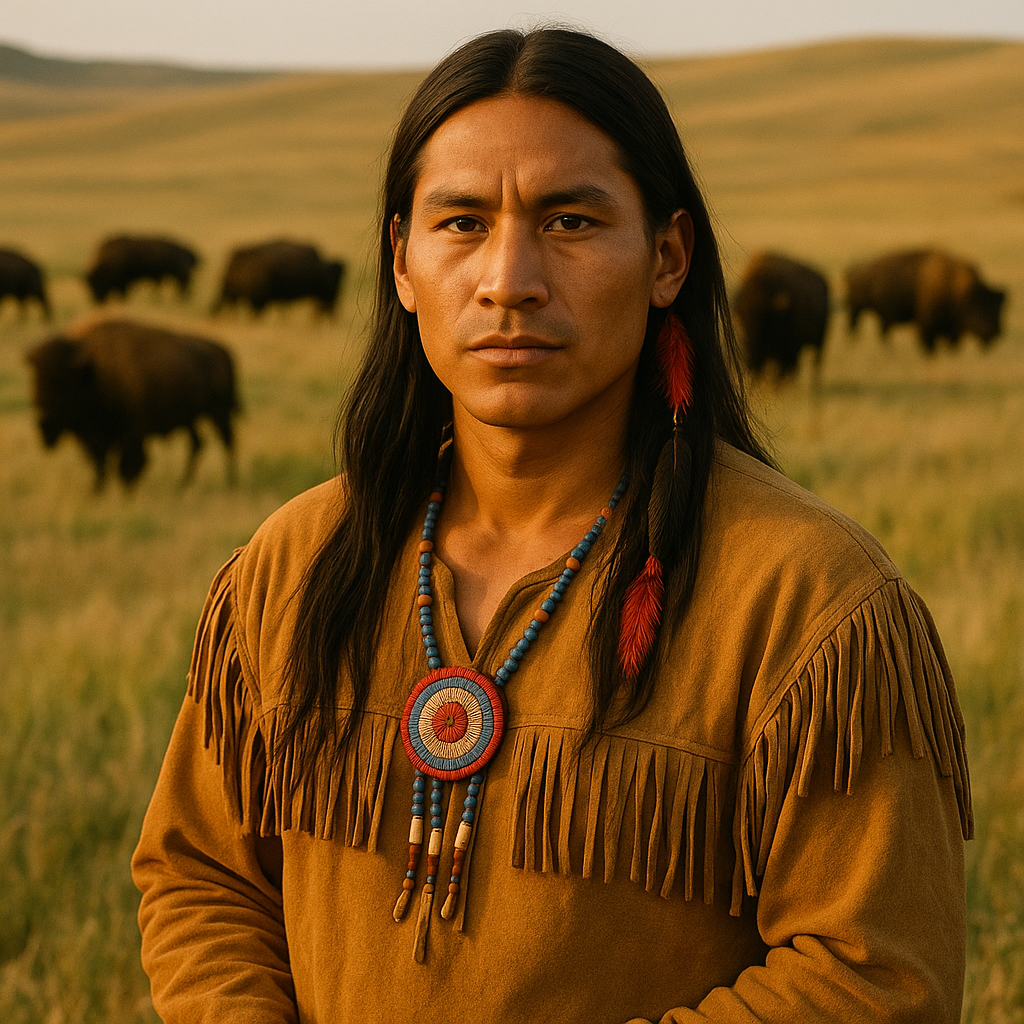
They call me Chaska. I am Akíčhita—a man trusted to help keep order, protect the camp, and scout the way ahead. My work is often quiet: watchfulness, responsibility, and making sure our people can live in peace.
“Mitákuye Oyás’iŋ” — all my relations. We live with respect for the buffalo, the river, the wind, and the earth. A strong person does not take more than is needed, and does not speak proudly unless he has earned it.
Where & Who
I am Lakota, part of the great circle of the Očhéthi Šakówiŋ. Our life follows the seasons—moving with the buffalo, finding good water, and choosing camp places that keep families safe.
- People: Lakota (Očhéthi Šakówiŋ)
- Homelands: western Dakota Territory and the plains near the Black Hills
- Camp life: families, elders, children, and relatives—everyone has a place
- Daily truth: water, weather, and good judgment matter as much as strength
Responsibilities
An Akíčhita helps keep good order. That can mean night watch, horse guarding, or guiding people safely when the camp moves. It can also mean stepping in early—before anger becomes a fight.
- Support leaders’ decisions and protect the peace of the camp
- Guard horses and watch the edges of camp—especially at night
- Scout routes ahead and report what I see clearly and honestly
- Help organize hunts so families have food for winter
Daily Skills
Our land speaks if you pay attention. Tracks tell you who passed and how long ago. Wind tells you where scent goes. Clouds tell you whether you have hours—or minutes—before weather changes your plans.
- Reading sign: tracks, broken grass, bird calls, smoke, and shadows
- Weather sense: wind shifts, storm edges, and safe shelter places
- Hunt signals: hand signs and rider spacing so a hunt stays controlled
- Night watch: quiet movement, listening, and steady attention
Values
Strength without respect becomes trouble. A good person protects the young, honors elders, shares when others are hungry, and stays humble—because the world is bigger than any one man.
- Courage: not loud—steady
- Generosity: sharing food and help strengthens the people
- Loyalty: to family, relatives, and the camp
- Respect: for elders and for all living things
Gear & Traditions
What we carry must earn its place. A horse, a blanket, and a few tools can mean the difference between safety and hardship. Before a hunt, we prepare our minds as well as our bodies.
- Weapons: bow and lance; later, some men use rifles
- Horse: trained, trusted, and cared for like a relative
- Practice: prayer and quiet focus before difficult work
- Camp life: cooking, hide work, and sharing duties among relatives
What is an Akíčhita?
It is not just a title. It is a responsibility. An Akíčhita is trusted to act for the good of the people—keeping order, protecting the camp, and doing hard tasks without seeking attention.
- Chosen from those known to be reliable and disciplined
- Acts as camp police, scout, and helper to leaders
- Expected to be calm under pressure
- Works so families can live safely and peacefully
How a Scout Thinks
When I scout, I do not look for one thing. I look for how everything fits together — the land, the wind, the animals, and the way people move when they believe no one is watching. A scout is not only eyes. He is patience.
I start with the wind. Wind tells you what carries toward you and what carries away. It tells you where smoke will drift, where scent will travel, and whether a hidden thing will announce itself before you ever see it.
Then I read the ground. Tracks are not just footprints — they are a story written in dust and grass. The weight of a step, the depth of a hoof, the direction of a broken stem, the shine of fresh dirt. Even silence is a sign. When birds go quiet all at once, something has changed.
What I watch first
- Wind: direction, strength, sudden shifts
- Water: where it is, how clean it is, who has used it
- Sky: storm edges, light changes, distant rain
- Animals: where they feed, how they react, what they avoid
What the ground tells me
- Freshness: crisp track edges or softened by time
- Speed: walking, trotting, running, or dragging
- Load: heavier steps, deeper prints, uneven stride
- Direction: purpose or wandering — the difference matters
How I move
- Stay low on ridges — the sky behind you gives you away
- Use draws and folds of land for cover
- Stop often — motion is what the eye catches first
- Touch nothing you don’t need to touch
What I report back
- Truth: not guesses, not stories
- Distance: how far, how long to reach
- Risk: weather, water, difficult ground
- Best path: the safest way, not the quickest
Lakota Akíčhita
A Lakota Akíčhita is a protector who is trusted with defense, discipline and enforcment of order.
In Lakota communities, akíčhita were men organized to: 1. protect the camp and community 2. act as scouts/guards 3. enforce rules and keep order (especially during hunts, moves, and large gatherings) 4. oversee camp defense and discipline.
“Courage, order, and care for our people — this is the Akíčhita way.”
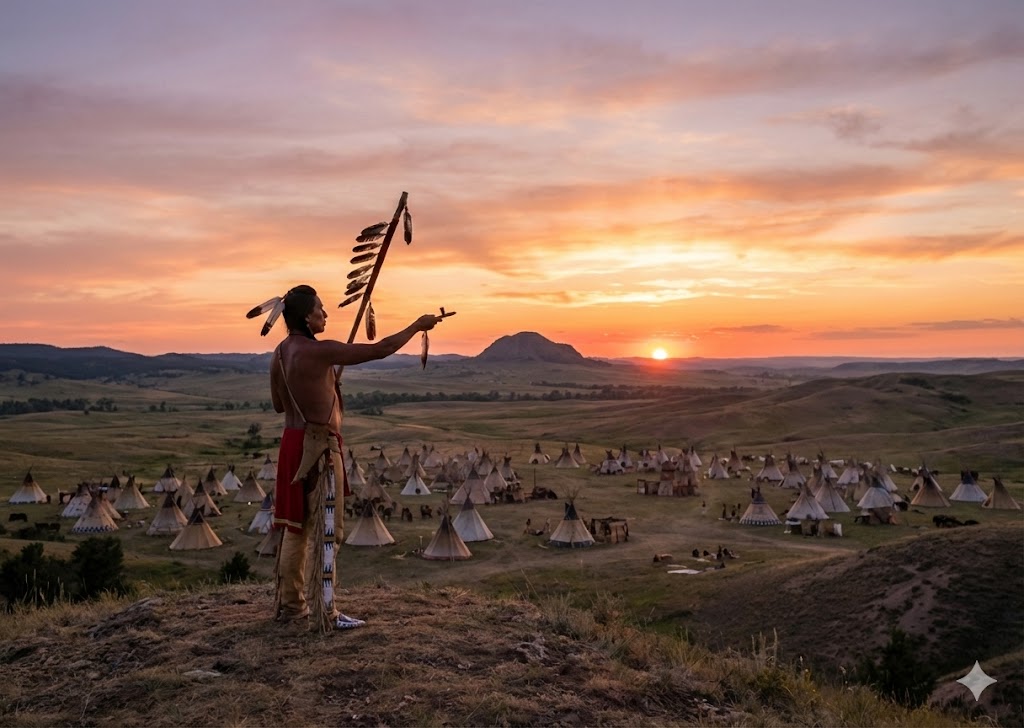
A quiet moment — looking over the village
When the day’s work is done, I like to stand where I can see the whole camp: smoke rising from the cooking fires, children laughing, horses shifting in the grass, and relatives moving between lodges. From a distance, you can feel how a village breathes—like one body made of many lives.
It reminds me why order matters. Not order for pride, but order for protection. A safe camp means families sleep. Elders rest. Hunters wake strong. The people can move with confidence, not fear.
And when the wind comes down from the hills, I remember Mitákuye Oyás’iŋ. The land is not a thing we own. It is a relation. If you listen long enough, it teaches you how to live.